Roofing Dumpster Rental
Roofing is the clearest example of a project where weight, not volume, decides the container. Tear-off shingles are dense, so a container can reach its weight allowance while still looking half empty.
Request options for roofing dumpster rental
Start with the ZIP code where the container will be delivered, then describe the debris in a few quick steps.
- No account required and no obligation to book
- Contact details are only asked for at the final step
- Your request is stored before you see a confirmation
Start your request
Two quick details to begin. No contact information yet.
Typical projects and what to plan for
Full roof replacement
A complete tear-off on an average single-family home is commonly handled with a 20 yard container, with the weight allowance as the deciding detail.
Multiple existing layers
Each additional layer of old shingles multiplies the weight removed. Tell providers how many layers you expect so the allowance can be matched.
Placement near the roofline
Roofers work faster when the container sits close to the tear-off area, but placement still needs truck clearance and must avoid overhead lines.
Partial or garage roofs
Small roof sections often fit a 10 or 15 yard container, which is also easier to place on a short driveway.
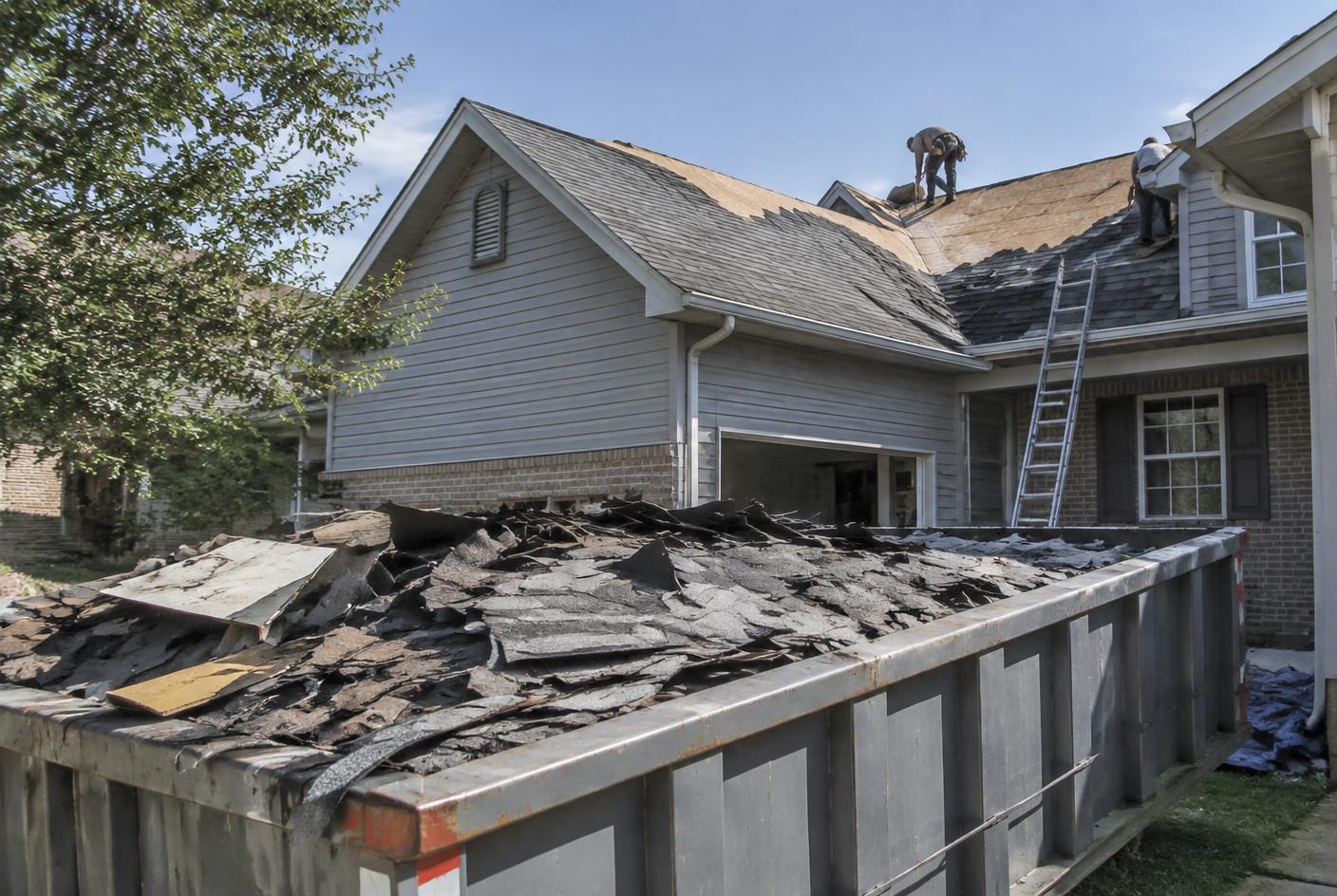
Choosing a container size
- Small roof section or garage: 10 to 15 yards.
- Average single-family roof, single layer: often 20 yards.
- Large roof or multiple layers: 20 to 30 yards, with weight allowance confirmed first.
- Ask for the included tonnage and the overage rate before choosing between two sizes.
What providers usually accept
Acceptance rules are set by each provider and by the receiving disposal facility, so treat these as planning notes and confirm specifics before loading.
- Asphalt shingles are accepted by most providers, sometimes with a preference for clean loads of shingles only.
- Tear-off debris often includes nails and underlayment; site protection and cleanup are worth planning for.
- Wood shake, tile and metal roofing behave differently by weight and may be handled or priced separately.
- Any suspected asbestos-containing roofing material requires specialist assessment and handling, not a standard roll-off.
What changes the cost for roofing dumpster rental
We do not publish average prices, because an average hides the variables that actually decide your total. Use these factors to compare quotes on equal terms.
| Factor | Why it matters |
|---|---|
| Container size | Larger containers generally carry a higher base rate, but choosing a size that is too small can lead to a second haul that costs more overall. |
| Debris type | Household junk, mixed construction debris, roofing material and concrete are handled and disposed of differently, which affects what a provider charges. |
| Included weight | Most rentals bundle a weight allowance with the base rate. The size of that allowance is one of the biggest differences between two quotes that look similar. |
| Rental duration | A quoted rate covers a defined rental window. Longer projects, delays or weather can push a rental past that window. |
| Delivery distance | Distance between the provider's yard, your project and the disposal facility affects transport cost, especially outside dense metro areas. |
| Disposal fees | Disposal and tipping costs vary by facility and material, and they are passed through in the total rather than being fixed nationally. |
| Heavy materials | Concrete, brick, block, dirt and shingles reach weight limits quickly, so providers often restrict them to specific containers or fill levels. |
| Public right-of-way placement | Placing a container on a street, sidewalk area or other public right-of-way can require permission or a permit, which adds steps and potential cost. |
Compare container sizes
Container specifications differ between providers, so these descriptions focus on the projects each size typically suits rather than fixed dimensions or weight limits.
10 Yard
Smallest common roll-off. Practical where space is tight or debris is heavy.
Often used for: Single-room cleanouts, small bath remodels, limited concrete or dirt loads
15 Yard
A middle step when debris is bulky but the driveway is still limited.
Often used for: Medium cleanouts, flooring removal, small remodels, deck teardowns
20 Yard
The common all-purpose size for cleanouts, remodels and roof work.
Often used for: Whole-home cleanouts, kitchen remodels, roof replacements, mid-size construction
30 Yard
High-volume container for larger renovation and construction debris.
Often used for: Large renovations, new construction, multi-room demolition, big cleanouts
40 Yard
Largest common roll-off, used for high-volume lightweight debris.
Often used for: Major construction, commercial projects, large-volume light debris
Questions to Ask Before Booking
Two quotes for the same container size can differ enormously once the rental window, weight allowance and extras are compared. These are the questions that surface the real total.
- What rental period is included?
- What weight allowance is included?
- What happens if the load exceeds the included weight?
- Are any materials restricted or priced separately?
- Are extra rental days charged?
- Is delivery and pickup included?
- Does placement require permission or a permit?
- How is pickup requested when the project is finished?
Roofing Dumpster Rental questions
What size dumpster do I need for a roof replacement?
Many average single-family tear-offs use a 20 yard container, but the right answer depends on roof area, the number of existing layers and the weight allowance included. Share those details in your request.
Can I mix roofing debris with other material?
Sometimes, though some providers prefer a clean shingle-only load and price it differently. Ask before combining tear-off with general construction debris.
How close to the house can a container be placed?
Close placement speeds up tear-off, but the delivery truck needs room to position and later retrieve the container, and overhead clearance must be checked. Confirm with the provider before delivery day.
North Carolina locations
Disposal costs, hauling distance and placement rules are local. Start with the market closest to your project.
Ready to request roofing dumpster rental options?
Share your ZIP code, the debris and your timing. We will organize the request so relevant independent local providers can respond.