Concrete & Heavy Debris Dumpster Rental
Dense material follows different rules from general debris. Concrete, brick, block and soil are heavy enough that legal transport weight, not container volume, controls how much can be loaded.
Request options for concrete & heavy debris dumpster
Start with the ZIP code where the container will be delivered, then describe the debris in a few quick steps.
- No account required and no obligation to book
- Contact details are only asked for at the final step
- Your request is stored before you see a confirmation
Start your request
Two quick details to begin. No contact information yet.
Typical projects and what to plan for
Concrete removal
Driveway, patio and slab removal usually needs a smaller dedicated container, often with a marked fill line rather than a full load.
Brick and block
Masonry demolition behaves like concrete for weight purposes. Keeping the load clean and free of mixed debris often matters to providers.
Dirt and soil
Soil is accepted only by some providers and facilities, and typically only as a clean single-material load. Confirm before excavation begins.
Weight planning
Ask what the fill limit is for your material and what happens if the load exceeds it. This is the single most useful question for heavy debris projects.
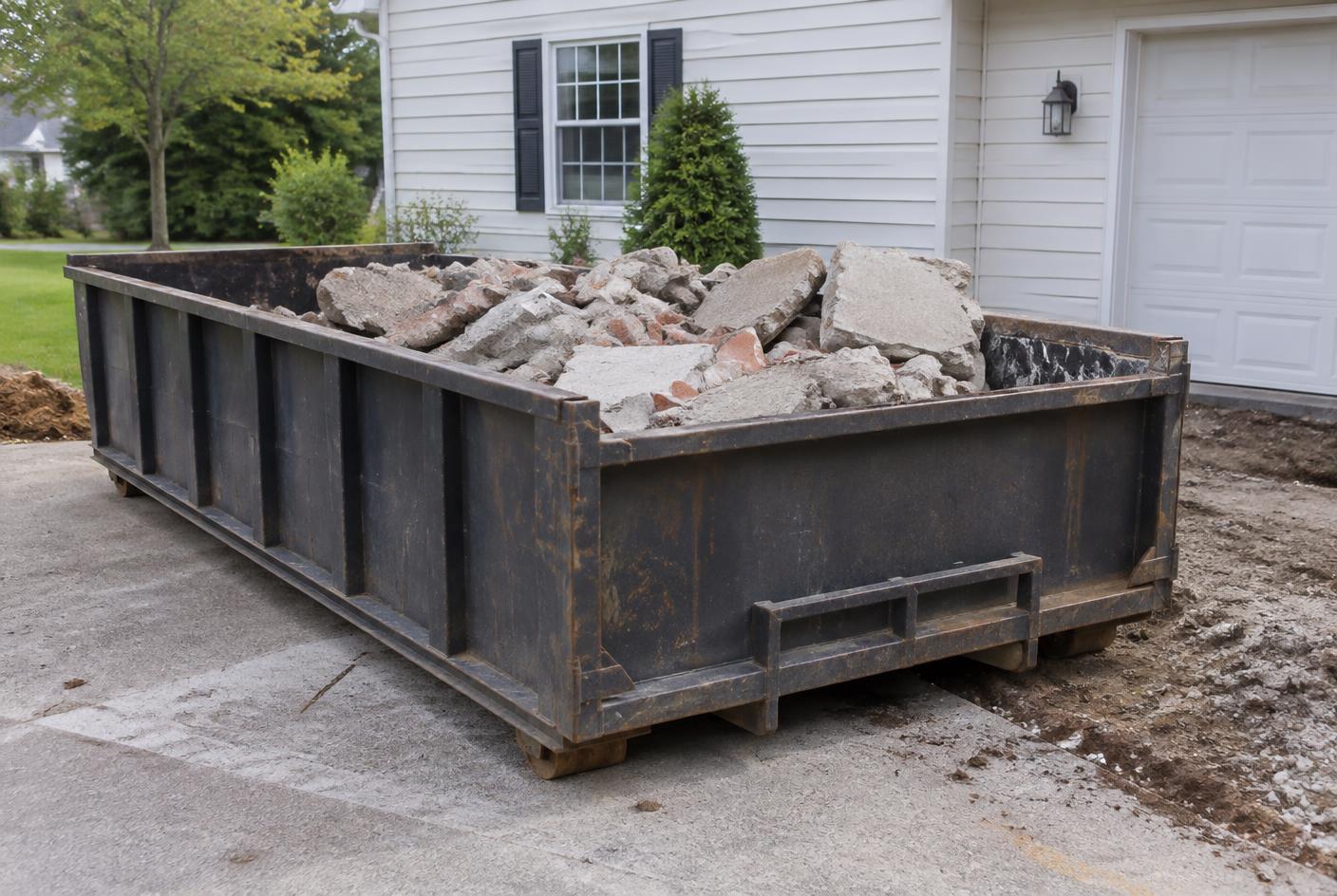
Choosing a container size
- Clean concrete, brick or block: commonly a 10 yard container with a fill limit.
- Larger demolition volumes: several smaller loads or scheduled swaps instead of one large container.
- Never assume a 20, 30 or 40 yard container may be filled with dense material — most providers prohibit it.
- Separate heavy material from mixed debris to avoid weight overage on your general container.
What providers usually accept
Acceptance rules are set by each provider and by the receiving disposal facility, so treat these as planning notes and confirm specifics before loading.
- Provider rules and allowable loads vary for heavy materials, and acceptance depends on the receiving facility.
- Clean, single-material loads are often handled differently from mixed heavy debris.
- Reinforced concrete with rebar may be restricted or priced separately.
- Contaminated soil requires specialist assessment and is not general roll-off debris.
What changes the cost for concrete & heavy debris dumpster
We do not publish average prices, because an average hides the variables that actually decide your total. Use these factors to compare quotes on equal terms.
| Factor | Why it matters |
|---|---|
| Container size | Larger containers generally carry a higher base rate, but choosing a size that is too small can lead to a second haul that costs more overall. |
| Debris type | Household junk, mixed construction debris, roofing material and concrete are handled and disposed of differently, which affects what a provider charges. |
| Included weight | Most rentals bundle a weight allowance with the base rate. The size of that allowance is one of the biggest differences between two quotes that look similar. |
| Rental duration | A quoted rate covers a defined rental window. Longer projects, delays or weather can push a rental past that window. |
| Delivery distance | Distance between the provider's yard, your project and the disposal facility affects transport cost, especially outside dense metro areas. |
| Disposal fees | Disposal and tipping costs vary by facility and material, and they are passed through in the total rather than being fixed nationally. |
| Heavy materials | Concrete, brick, block, dirt and shingles reach weight limits quickly, so providers often restrict them to specific containers or fill levels. |
| Public right-of-way placement | Placing a container on a street, sidewalk area or other public right-of-way can require permission or a permit, which adds steps and potential cost. |
Compare container sizes
Container specifications differ between providers, so these descriptions focus on the projects each size typically suits rather than fixed dimensions or weight limits.
10 Yard
Smallest common roll-off. Practical where space is tight or debris is heavy.
Often used for: Single-room cleanouts, small bath remodels, limited concrete or dirt loads
15 Yard
A middle step when debris is bulky but the driveway is still limited.
Often used for: Medium cleanouts, flooring removal, small remodels, deck teardowns
20 Yard
The common all-purpose size for cleanouts, remodels and roof work.
Often used for: Whole-home cleanouts, kitchen remodels, roof replacements, mid-size construction
30 Yard
High-volume container for larger renovation and construction debris.
Often used for: Large renovations, new construction, multi-room demolition, big cleanouts
40 Yard
Largest common roll-off, used for high-volume lightweight debris.
Often used for: Major construction, commercial projects, large-volume light debris
Questions to Ask Before Booking
Two quotes for the same container size can differ enormously once the rental window, weight allowance and extras are compared. These are the questions that surface the real total.
- What rental period is included?
- What weight allowance is included?
- What happens if the load exceeds the included weight?
- Are any materials restricted or priced separately?
- Are extra rental days charged?
- Is delivery and pickup included?
- Does placement require permission or a permit?
- How is pickup requested when the project is finished?
Concrete & Heavy Debris Dumpster questions
Why can't I fill a large container with concrete?
A full large container of concrete would exceed legal transport weight for the hauling truck. Providers use smaller containers and fill limits so the load can be moved safely and lawfully.
Can I mix concrete with wood and drywall?
Usually not. Most providers require clean loads for heavy material because disposal facilities handle it separately. Plan for two containers if your project generates both.
Is dirt accepted?
Sometimes, as a clean load only, and it depends on both the provider and the local facility. Confirm acceptance and any fill limit before you start digging.
North Carolina locations
Disposal costs, hauling distance and placement rules are local. Start with the market closest to your project.
Ready to request concrete & heavy debris dumpster options?
Share your ZIP code, the debris and your timing. We will organize the request so relevant independent local providers can respond.